Assembly mistakes and errors can include not setting up workpieces or equipment correctly, skipping or incorrectly performing processing steps, missing parts, and wrong part placement.
Some of these errors can be attributed to operator fatigue or distraction. To err is human. It is normal for people to make mistakes. This means assisting the operators in making fewer mistakes and being more productive without having to constantly check and recheck. Help comes in the form of technology to error-proof your facility.
Sensors
Sensors can help the operator by signifying when something is prepared incorrectly if parts are missing or installed incorrectly, or measurement tolerances are not acceptable. Sensors come in all forms:
- Discrete
- Indicates a yes or a no.
- Ensures a threaded or textured surface.
- Ensures a component is properly placed or is not missing.
- Analog
- Takes measurements
- Used to reduce process variation
- Used in highly flexible applications
- Vision-based
- Visually inspects
- Used for making sure material is secured in the assembling fixture.
- Can inspect many points on a part.
- Used for inspecting details on randomly located details or parts.
Vision Systems
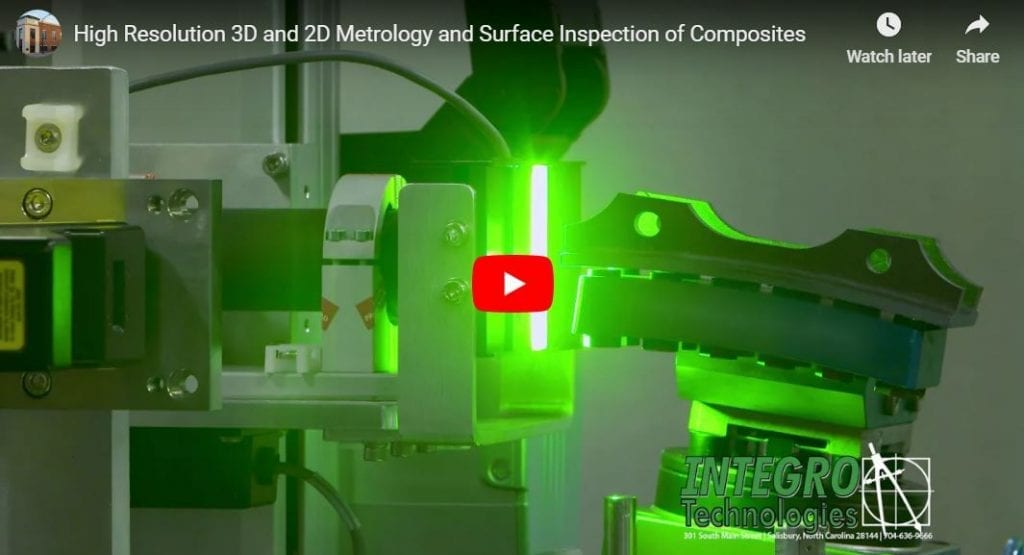
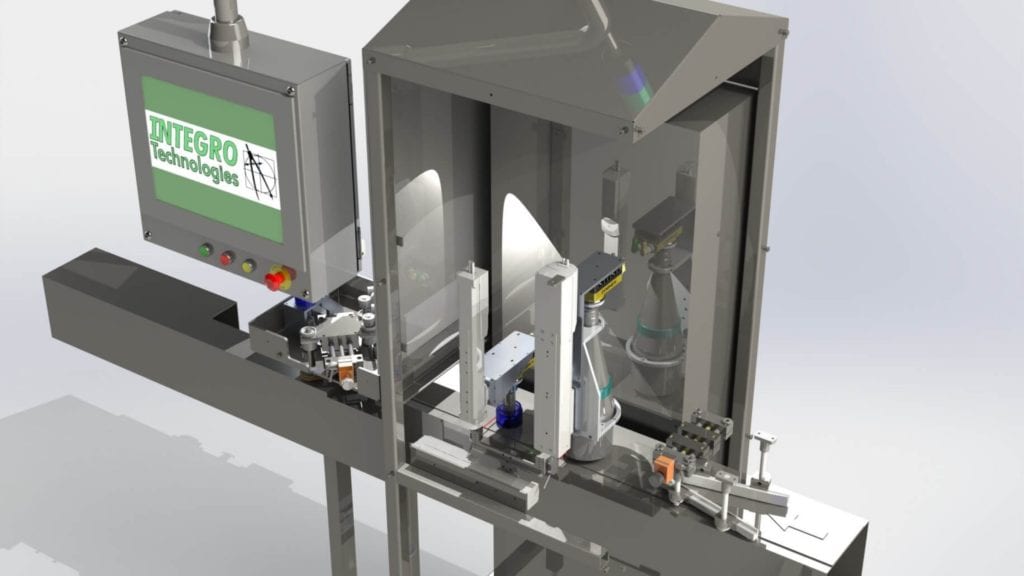
Vision systems can be used for robot guidance, precise and clear image analysis, or image capture and storage.
The image storage and capture function is best used to capture an image of a correctly assembled product or the “golden” standard and store it for comparison. When production starts, the assembled product is compared to the “golden standard” and either conforms or does not.
On any Integro Technologies’ vision systems, barcode scanners, discrete, analog, vision-based, or specialty sensors can be added to the assembly process to increase productivity and quality while reducing cost.
Traceability Records
Traceability records can be added to the vision systems and can pinpoint where in an assembly process the most mistakes occur, collecting and compiling data from the various sensors and barcode scanners.
Traceability records do not exist to get the operator in trouble. They are designed to spot where in the process the most mistakes are happening so steps can be taken to make corrections and lower the number of errors.
Contact us for an engineered solution to get closer to an error-free assembly process.